Sunday, July 29, 2012

Is the outdoor industry really a "green giant"?

Interesting question from High Country News.  Their conclusion: "The outdoor recreation industry needs to start walking its talk to become the force for conservation it claims to be."

Read the full article here.

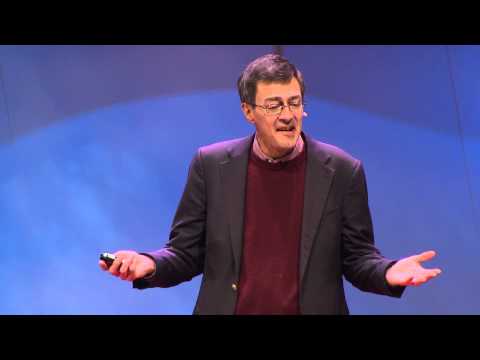
Image is of Paul Larmer, the High Country News reporter responsible for the quoted article; image is linked from the article's website.

Wednesday, July 25, 2012

Conservation emulation

I received an interesting message from West Penn Power (our electricity company) the other day.

I thought it was a bill, so I'd put it aside with other bills to pay.  But it turned out to be something much more interesting - a comparison of our electricity consumption to that of similar-sized households in our neighborhood.  Here's a snippet from the letter (this is for the most recent 2 months).

Wow! We are more efficient (by a few percent) than the average of our "efficient neighbors" (studying the fine print reveals that that means those in the lowest quintile of energy consumption in comparable-sized houses).  I feel pleased to have gotten two smiley faces - maybe my efforts with TED are paying off! - and motivated to keep our lead over our neighbors.  (Now, if I could only get one of those chili peppers over on RateMyProfessors as well...)

There have been academic studies of these kind of efforts (for instance this one, which seems to be about exactly the same kind of information that I received from West Penn Power), and they show that simply telling people how their power consumption compares with their neighbors' produces sustained community-wide power savings.  The effect is "equivalent to that of a short-run electricity price increase of 11-20%" - not enough to save the world, but a substantial payback for sending out a bunch of letters. 

Of course you might worry that, now I know that we use less (electrical) energy than our neighbors, I might be tempted to relax my energy vigilance a bit - maybe I can run the A/C more and still come out better than average?   The study cited above looked for this kind of "rebound effect", but didn't find it.  And it does not really fit with the competitive spirit: if I am winning a race in which there are ten runners, will I be satisfied to drop back to fourth place just because I will still be better than average?  I have some questions about the value of competition but here at least it seems to be working in our favor!

Further reading:

Monday, July 23, 2012

A time for lament

 I've recently started reading Leslie Allen's book, A Liturgy of Grief: A Pastoral Commentary on Lamentations. This is a verse-by-verse commentary by a Hebrew scholar who is also a hospital chaplain,ministering regularly to people walking through grief and loss.  His proposal is that Lamentations "be read as the script of a liturgy performed to help the people of God come to terms with the fall of Jerusalem and the national catastrophe it entailed".

The first word of the book of Lamentations is ekhah in Hebrew, which Allen translates as "How terrible!" It "traditionally belonged to the funeral dirge and introduced a contrast between a grim present and a good past, a chasm that bereavement had created...It is a shriek, a scream..."  Suddenly, the city whose destiny was supposed to be "the joy of the whole earth" has become empty, desolate: a wasteland (2:15). At some level, people knew that their priorities were amiss: but had they deserved this sudden judgment? Should the innocent also suffer? (2:11)  Has God forgotten them? (5:20)

The church has forgotten how to lament, says one reviewer of this book. "Committed to celebration, it has few tools to articulate excruciating grief at a loss, to confess sin and accept divine judgment, or to express frustration with God in times of trouble."  Here in Central Pennsylvania, a season of judgment has come upon us with the revelation that the revered football program - a local idol - harbored a child-destroying monster, a Molech, at its heart. I hope that we in the faith community can learn from Lamentations how to walk through this season.  I'm especially shaken by the Freeh report's timeline that Penn State's awareness of the abuse began in 1998.  That is the very year that I moved to Penn State - this has been going on my whole life here.  It feels something like original sin.

But I didn't begin reading Lamentations to think about the Sandusky scandal. It seems to me that grief work is going to be a necessary and important part of any faith-based approach to sustainable, post-growth living.  Yes, one can articulate a positive and and attractive vision of the steady-state economy.  But to get there requires us to abandon the humanistic dreams that have powered the Western world for the past 150 years, and we probably won't do that until circumstances compel us, until judgment (at least a preliminary and proleptic judgment) falls.  Advocating for creation care now is right and good, but we're fooling ourselves if we think that a "green" makeover can leave the growth model fundamentally unchanged.  Are we ready to comfort the afflicted and the grieving, those whose dream has failed?  That is also a spiritual journey.

The only book that I'm aware of that starts off with this kind of question is Sacred Demise by Carolyn Baker.  And this is not a book with much sympathy for Christianity - Dr. Baker fully accepts the indictment that makes the "Judeo-Christian worldview" responsible for the dominating, destructive, objectifying (etc) aspects of industrial civilization, and takes it for granted that the spiritual resources necessary for post-industrial grieving will be found elsewhere.  Where should one begin thinking about these questions from a Christian perspective?


Monday, July 16, 2012

Air-conditioning

The New York Times has a debate forum today on air-conditioning: The six participants run the gamut: from describing A/C as a luxury the world cannot afford, to a eulogy of air-conditioned football stadiums in Arizona.  The contributions that seem most helpful to me are those which describe how the availability of A/C has led to the downgrading of traditional architectural practices and lifeways which allowed our ancestors - not so long ago - to make it through the summer heat.

For what it's worth, there has been only one day so far this summer (July 7th) when we cracked and turned on the A/C. The TED log for that day reveals that our household electric consumption was roughly double that of a regular day!  The air-conditioner is an energy hog, something like 5kW when it is running (this includes the furnace blower).  Some of the tricks we've used to keep ourselves comfortable without A/C are:
  • Whole house fan (installed some years ago), and getting up early in the morning to run it and suck cool air into the house.  Of course it helps to have a cheap thermometer that shows inside and outside temps, so one can decide when this is a losing game.
  • Careful with shades, so as not to let sunlight in (solar gain) on the south side of the house. I'm just talking ordinary drapes and blinds here - we don't have any fancy reflective stuff.
  • Extra roof insulation (R50) installed this year and a solar roof fan.  Really seems to make a difference upstairs.
  • Indoor fans, occasional cold showers, and ice water!
With these tricks we've been comfortable even with outside temperatures in the high 90s.   (Yes, inside temps are in the 80s. We can live with that.)   Are there other tricks we're missing?


Saturday, July 14, 2012

The Human Stain

This isn't about the novel by Philip Roth.  I'm continuing the series that began with this post, thinking aloud about how the "shape" of our spirituality interacts with the way we think about environmental issues.

Today I'm thinking about an aspect of my evangelical "shape" that is given classic expression in this hymn of Theodore Monod (1836-1921):
 
  1. Oh, the bitter pain and sorrow
    That a time could ever be,
    When I proudly said to Jesus,
    “All of self, and none of Thee.”
  2. Yet He found me; I beheld Him
    Bleeding on th’ accursed tree,
    And my wistful heart said faintly,
    “Some of self, and some of Thee.”
  3. Day by day His tender mercy,
    Healing, helping, full and free,
    Brought me lower while I whispered,
    “Less of self, and more of Thee.”
  4. Higher than the highest heaven,
    Deeper than the deepest sea,
    Lord, Thy love at last has conquered:
    None of self, and all of Thee.”
In this hymn, the New Testament call to self-denial has been transformed into a kind of metaphysical principle.  Jesus' spirit and the human spirit, like oil and water, can fill the vessel of my life in varying proportions, but can never mix.  The end-goal of the life of faith, it seems, is the obliteration of the "self", which is a kind of contaminant, so that only "Thee" - Jesus - remains.

This picture has motivated many good and noble people,and it's not my purpose to knock it. (For a take-no-prisoners critique, you could try Philip Cary's Good News for Anxious Christians, though I think that Cary finds it so hard to understand why anyone would see things this way that he may not always connect with his intended audience.) But I do want to mention a couple of aspects that seem to me to have "environmental" connections:

(a)  If I understand the redemptive goal of my individual life in terms of self-obliteration and replacement by Jesus, I may well understand the destiny of the planet in terms of obliteration and replacement also. If I do, that might well reduce my motivation to take action to preserve it now!

(b) There is a curious resonance between this theology and the "deep green" perspective that sees humanity itself as a contaminant, "the ultimate invasive species" that threatens the integrity of the earth (in some versions of this idea, the planet - Gaia - will push back until there are none of us left, just as in verse 4 of the hymn).

(c) Did you notice the word more in the hymn? In some email correspondence a couple of years ago, Byron Borger helped me see the connection between the genre of spirituality which uses this kind of language about God (we want more of Him, we want to go deeper, we are hungry for more, etc...) and the cultural/economic trend for more, bigger, smarter, better in our material consumption... the very trend which seems to be driving us to live outside our ecological means.  Interesting...

PS: I was not able to find out anything much about the hymn writer, Theodore Monod.   He is not the same person as Theodore Monod the naturalist and "Christian anarchist", who died in 2000; but I guess that they are related.


The Surprising Evangelical Consensus on Climate


Reposting from the blog "Clothesline Report" (H/T Byron Smith for this link):

"A growing chorus of evangelical leaders is calling Christians and churches today to deal seriously with creation care. Their core message is that caring for God’s world is an essential element of allegiance to Christ, the author and heir of creation; and that the world’s poor suffer the most from environmental degradation and climate change. As such, they tell us that caring for the earth is essential to loving both the Creator and our neighbors who depend on creation’s bounty.

Many Christians will be surprised at this, because of the prevailing assumption that creation care and climate change are controversial topics among evangelicals. In fact, however, the evangelical community has spoken with notable consistency..."

Read the rest.

Tuesday, July 10, 2012

Environmental economics discussion at GreenFaith

One of the great parts of the GreenFaith fellowship program is our monthly webinar.  Yesterday's webinar featured an opportunity for us to hear from Gernot Wagner, an environmental economist who works for the Environmental Defense Fund. It was a privilege to hear from someone who has been active and involved at a high level in so many environmental causes.  Nevertheless, I found myself increasingly uneasy with some aspects of his presentation - I hope it is not out of order to say why.

A good summary of Gernot's thinking can be found in this New York Times op-ed which he wrote a year or so ago. Titled, "Going Green but Getting Nowhere", it makes the undeniable point that individual "green" efforts, however worthy, do not aggregate to anything like enough to make a dent in society's consumption and pollution trajectory  So,

individual action does not work. It distracts us from the need for collective action, and it doesn’t add up to enough. Self-interest, not self-sacrifice, is what induces noticeable change. Only the right economic policies will enable us as individuals to be guided by self-interest and still do the right thing for the planet.  

In writing, "Self-interest, not self-sacrifice, is what induces noticeable change", Gernot articulates the economist's understanding of human behavior since the days of Adam Smith.  And this leads him to his policy proposals: to make it harder for individuals and business to externalize pollution costs, we need to create property rights related to these costs, and markets in which these rights can be traded.  For Gernot, this is "Common Sense 101" and is also biblical, an implementation of the commandment "Thou shalt not steal". In practical terms, what it means is "cap and trade".  Based on expert advice, a national or supranational limit is agreed on the total amount of carbon dioxide (or whatever) that can be emitted (the "cap"); emissions permits are issued to businesses and/or individuals up to this total, and these permits may then be sold or exchanged ("trade"); it becomes a crime to emit carbon dioxide in excess of the number of permits held.  The invisible hand of the market then sets the price of emissions and achieves the "safe" outcome (determined by the experts) in the cheapest possible way.

Cap and trade has had notable successes, especially in combating acid rain.  And it's hard to disagree that financial incentives must play and important part in limiting pollution and other negative externalities (though there are alternative ways to achieving this, such as Pigouvian taxes).  The problem that I have with the model, as least as it was presented in the webinar, is its tendency to confiscate from ordinary people their ability to make a moral response to climate change and ecological devastation, surely among the greatest moral and spiritual crises of our time.  Under cap and trade, the only people on earth whose concern about climate change need be more than purely financial - the only ones whose response is, if you like, "normative" rather than merely "positive" economics - are the experts who set the cap. As for the rest of us, we pay the increased price that the market demands and go on our polluting way.  Our coin "in the coffer rings" and, like the hapless purchasers of Tetzel's indulgences, our soul "from (environmentalist) purgatory springs". No more moral concerns for us!

In the cornucopian picture, humanity wanders a garden of delights which are there for the taking.  "Cap and trade" adds a wall around the garden and a stern warning not to go too far.  But it leaves unchallenged the idea that, within the wall, our life goal is to consume as much as possible.  Perhaps some of the fruits of this garden are not even good for us?