Tuesday, February 26, 2013

Hotel Greenwash

You've probably seen these signs, right?

"Save Our Planet".

If you care, hang up your towel and we won't change it! Save millions of gallons of water and detergent!

Well, I faithfully hang up my towel but every day it gets changed anyhow.

I'm not blaming the cleaning staff.  They are probably underpaid and have a lot of work to do without worrying about my eco-sensibilities.

But it's hard to escape the conclusion that the object of the exercise is to make us feel good about how we are doing something for the environment.  Not, uh, actually to do anything...


Sunday, February 17, 2013

We Can Do That, Too!

Vampire Spa "Let my people go!"

Twelve chapters (4-15) of the book of Exodus center around those words, spoken by Moses on behalf of God to the pharaoh (or king) of Egypt, who has enslaved the descendants of Joseph. Ten plagues strike Egypt before the pharaoh obeys. The first is recorded in chapter 7.
In the sight of Pharaoh and of his servants, Moses lifted up his staff and struck the water in the Nile, and all the water in the Nile turned into blood.  The fish died, and the Nile stank, and... there was blood throughout the land of Egypt.
Then things take an unexpected turn. 
But the magicians of Egypt did the same by their secret arts.
What was the point of that?,  I want to ask. (The standard conundrum, where did they get the water?, doesn't seem to bother the biblical author a bit.)

The magicians don't have a helpful solution to offer (like changing blood back to water, for instance).  All that they can achieve is to undermine the story Moses is telling, the story which relates this mysterious disaster to their country's slave labor policies - to the source of their wealth.

Their counternarrative doesn't last long - they fade out of the story a couple of plagues later - but while it does, it serves to give Pharaoh some cover for his business-as-usual approach:

So Pharaoh's heart remained hardened...  Pharaoh turned and went into his house, and he did not take even this to heart.

 According to a midrash quoted by Brevard Childs in his commentary, Pharaoh believes that he can afford to be unconcerned; his wealth will shelter him from the troubles that his people must suffer. "You don't trouble me", this story has him replying to Moses, "for, if I can't have water, I'll drink wine."

Any excuse for inaction.


Photo entitled "Vampire Spa" by Flickr user jcoterhals, licensed under Creative Commons.

Friday, February 15, 2013

Electric-Car Battles

You've probably already heard about New York Times reporter David Broder's controversial recent article about a road trip he took in the Tesla Model S electric car.  If not, a quick recap.

The Tesla is a plug-in electric car (not a hybrid) which has won many awards.  Broder was offered a test drive from Washington, DC, to Connecticut. The point of the trip was not so much to test the car itself as to try out the new rapid recharging stations that Tesla had installed along the route.

Broder reported that the trip was a bust - he ran out of charge and the car had to be loaded on a truck - but the details of his account have been fiercely contested by Tesla boss Elon Musk (and Broder has counterchallenged in response).  Meanwhile, electric-car skeptics like Charles Lane of the Washington Post have seized on the debacle as further evidence that "the electric-car fantasy may finally have died".

Interestingly,  though, both camps seem to agree about what is the key question: can an electric car ever be as convenient and adaptable as its gasoline counterpart?  I'm not so sure that this should be the key question.

Gasoline is an incredibly efficient and compact way to transport energy around: according to Richard Muller's Energy for Future Presidents, a given weight of gasoline can store about 25-50 times as much useful energy as the same weight of batteries. (This figure takes into account the relative efficiencies of gasoline engine v. electric motor.) That is a high barrier for the electric car to climb, and I tend to doubt that it can be surmounted.

But gasoline is a nonrenewable resource: the US can't burn over 100 billion gallons a year, year after year, for ever.  And when the supply does get tight, Nature has no obligation to supply us with any equivalent fuel.  No natural law demands that Americans shall forever possess personal transportation devices capable of moving a half-ton payload in climate-controlled comfort four hundred miles without stopping.

The car of the future may be electric, if renewable electricity is available to fuel it. It may also be smaller, more inconvenient, and have less range.  But if it beats the alternatives available at the time, we'll still take it.

Thursday, February 14, 2013

Economics and Theology with Joe Stiglitz

On the blog of the Institute for New Economic Thinking is a video of a discussion at Union Seminary with Joseph Stiglitz, the Nobel Prize-winning economist, to inaugurate a year-long discussion on Economics and Theology.   Quoting their website: "The event was held on September 19, 2012, and featured a wide-ranging conversation with Stiglitz about the intersection of economics with hope, happiness, death, suffering, values, grace, and evil. Stiglitz was joined in the discussion by Union Theological Seminary President Rev. Dr. Serene Jones, INET Executive Director Rob Johnson, Union Professor of Social Ethics Gary Dorrien, and Betty Sue Flowers, former director of the Lyndon Baines Johnson Library and Museum and Emeritus Professor at the University of Texas". Here is a "highlights" video


And here is the full session


Tuesday, February 12, 2013

Prospects for a Green Mathematics


This is crossposted from the MPE2013 blog, and written by John Baez and David Tanzer.

It is increasingly clear that we are initiating a sequence of dramatic events across our planet. They include habitat loss, an increased rate of extinction, global warming, the melting of ice caps and permafrost, an increase in extreme weather events, gradually rising sea levels, ocean acidification, the spread of oceanic “dead zones,” a depletion of natural resources, and ensuing social strife.

These events are all connected. They come from a way of life that views the Earth as essentially infinite, human civilization as a negligible perturbation, and exponential economic growth as a permanent condition. Deep changes will occur as these idealizations bring us crashing into the brick wall of reality. If we do not muster the will to act before things get significantly worse, we will need to do so later. While we may plead that it is “too difficult” or “too late,” this doesn’t matter: a transformation is inevitable. All we can do is start where we find ourselves, and begin adapting to life on a finite-sized planet.

Where does mathematics fit into all this? While the problems we face have deep roots, major transformations in society have always caused and been helped along by revolutions in mathematics. Starting near the end of the last ice age, the Agricultural Revolution eventually led to the birth of written numerals and geometry. Centuries later, the Industrial Revolution brought us calculus, and eventually a flowering of mathematics unlike any before. Now, as the 21st century unfolds, mathematics will become increasingly driven by our need to understand the biosphere and our role within it.

We refer to mathematics suitable for understanding the biosphere as green mathematics. Although it is just being born, we can already see some of its outlines.

Read the full post.

Sunday, February 10, 2013

Its a Rental

I need some energetic music when working out.  I put on Switchfoot's wonderful Vice Verses.  The final track is Where I Belong.
The song chews over themes that the writer to the Hebrews meditates on, in chapter 11,
These...acknowledged that they were strangers and exiles on the earth.  People who speak thus make it clear that they are seeking a homeland...they desire a better country, that is, a heavenly one.  Therefore God is not ashamed to be called their God, for he has prepared for them a city.
This sense of  longing permeates much Christian spirituality (and rightly so). But it can overflow into seeing this present world - this body, this creation - as defective, second-rate, not worth taking seriously.  The lyric that brought me up short was
I'm not sentimental
This skin and bones is a rental
And no one makes it out alive
 "It's a rental"... Yes, it's true. The earth is the Lord's and the fulness thereof... human "dominion" just means managing, for a while, something with which I have been entrusted by another.  But "it's a rental" can also connote, "I don't have to take good care of it.  It doesn't really count".

I wonder what the band had in mind.  In Jesus' parables (e.g. Luke 19:12f), how the steward takes care of the master's property counts for everything.

Thursday, February 7, 2013

Math for Sustainability Course Description


 I just finished putting together a second draft for the description of the course I hope to teach next year (for GreenFaith readers, this is part of my GF Fellowship project).  Would love to have comments both technical and otherwise.  Here are links to other posts in this series: part 1, part 2, part 3, part 4
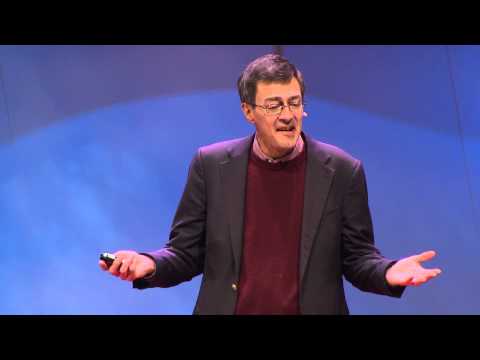
John winding up for the 2-minute version of the course at the GreenFaith retreat this January


MATH 033 – MATHEMATICS FOR SUSTAINABILITY
The course will provide students with the mathematical background and quantitative reasoning skills necessary to engage as informed citizens in discussions related to resources, pollution, recycling, economic change, and similar matters of public interest.   These include the four key mathematical ideas of “measuring”, “changing”, “risking” and “networking”, further detailed below.  Throughout the course, the techniques that are developed will be applied to a range of real-world examples at individual, local, and global scales.

This course is intended to be one of several offered by the mathematics department with the goal of helping students from non-technical majors partially satisfy their general education quantification requirement. It is designed to provide an introduction to various mathematical modeling techniques, with an emphasis on examples related to environmental and economic sustainability.  The course may be used to fulfill three credits of the GQ requirement for some majors, but it does not serve as a prerequisite for any mathematics courses and should be treated as a terminal course.