Thursday, January 9, 2014

Math on the Rocks

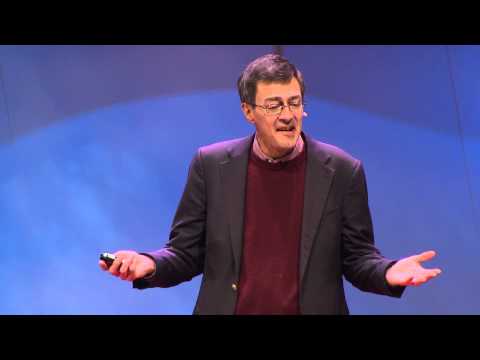
I'm giving a talk next week in Baltimore.

The occasion is an evening reception sponsored by the Association of Christians in the Mathematical Sciences, which is being held during the annual joint meeting of US mathematical societies - the biggest regularly scheduled math conference in the USA (maybe the world?).

It will be a short presentation called Math on the Rocks.  I'll talk about mathematics and climbing, and my perception of overlaps, connections and creative tensions between them.  If I manage to hit an environmental theme too, that will be pretty much the whole of this blog compressed into one half-hour talk!

If you'll be in Baltimore, you're welcome to come to the event!  There's an informal reception (with refreshments) at 5:30 on January 16th in the East/West Ballrooms of the Marriott Baltimore Inner Harbor Hotel, followed by my talk at 6:30.  After the talk, there's an opportunity for dinner: we have reserved tables of 8 at ten local restaurants, and you can arrange during the reception which group you would like to be in.

A very funny presentation of the connections between math and climbing is the article: Adams, Colin. “Into Thin Air.” Mathematical Intelligencer 22, no. 1 (2000): 21–22. I'm thinking I might start by quoting some of that article...

Sunday, December 29, 2013

Are People the Problem or the Solution?

Probably both.  At any rate, that is the title of an introductory lecture on demographics from Joel Cohen of Rockefeller and Columbia universities (which I learned of from the Dot Earth blog at the New York Times).  Here's a video
And here is a link to the transcript of the lecture (for those who, like me, prefer to read rather than to watch videos).

I've referred before to the command in Genesis to "fill the earth".  Looking at a graph like this, it seems that this at least is one command that humanity has succeeded in carrying out.


So what next? Professor Cohen makes his case for studying demography as follows:

I’d encourage any freshman, sophomore, junior, senior, adult, high school student—I’m not age prejudiced—anybody who wants to do three things to consider demography.  It’s not the only field that offers these attractions but it does offer them in spades.  It’s really very attractive.  First of all, demography gives you tools and analytical perspectives to understand better the world around you.  That’s understanding.  

Secondly, it gives you equipment to solve problems mentally.  It’s mentally exciting; you really have to use your noggin, and if you’ve got one use it or lose it.  So it’s use it.  And third, it is the means to intervene more wisely and more effectively in the real world to improve the wellbeing, not only of yourself—important as that may be—but of people around you and of other species with whom we share the planet.  

So it prepares you to go out and do something that’s worth doing for a larger good than only yourself.  So there’s an old saying, “If I am not for myself who will be; but if I am only for myself what am I; and if not now, when”?  So now is the time.  Pull up your pants and get to work.

Friday, December 27, 2013

Inexhaustible

Things run out.  The oil in the ground; the food we can grow; the days of our lives.  The nature of this blog (or maybe of its author) is to focus attention on such limits.  To live wisely is to live within bounds.  "So teach us to number our days", says the psalm attributed to Moses, "that we may gain a heart of wisdom". (Psalm 90:12)

Not just our physical resources run out.  Our emotional strength, our ability to forgive, even to pity.  There are limits to all of these, perhaps closer to the surface than we realize.  In Chesterton's story The Chief Mourner of Marne, the characters claim to "forgive" a crime whose nature they do not understand.  When realization dawns on them, they swing over to the opposite side like a door slamming. "There is a limit to human charity" cries the most sympathetic of them, 'trembling all over'.

Christians (in Chesterton's story represented by Father Brown) make the outrageous claim that there is one inexhaustible force at work in the world: the love of God.  Unlike "human charity",  Love never ends. (I Cor 13:8)  Christmas is the sign and token and proclamation that this love - electing, purifying, creative - has come among us and will persist - patiently, and at great cost - in bringing to fulfillment human beings and the world in which they share.  This love will not let go.  This love will not give up.  This love will not run out.  This love will win.

So, if I speak in the tongues of scientists and activists, but have not love, I am a noisy gong or a clanging cymbal.

And if I have prophetic powers, and my climate model is more accurate than any other; and if I have faith enough for geoengineering, but have not love, I am nothing.

And if I give away all that I have, and live off the grid an an ecovillage, and return my body to the cycle of nature through cremation, but have not love, I gain nothing.

For natural resources may be exhausted; tongues will cease; as for knowledge, it too will pass away.

But love never ends. 

Photo by Flickr user Fiona Shields, licensed under Creative Commons


Saturday, December 14, 2013

Recycling Heat

A lot of water flows to waste each day from the average American home. (Over 300 gallons per day according to the EPA.)  What's more, quite a bit of that water is hot. To heat a gallon of water (from domestic cold to hot temperatures) takes about 750 kilojoules of energy so 100 gallons a day of hot water represents 75 megajoules -  something like 800 watts of energy, all day, every day.

Even if cleaning and reusing the water itself might not be economic in a domestic context (and by the way, that is not so clear - especially as regards using "grey" water to flush toilets) it still makes sense to try to recover some of that heat before it goes down the drain. The most effective, but somewhat high-tech, way to do that would be to store the warm "grey" water somewhere and use it as the source for a heat pump.  However, simpler devices can be effective too. 

For instance, one can fit a shower drain with a heat exchanger like the one illustrated from ReTherm.  The idea is that the cold water supply to the shower exchanges heat with the waste water running down the drain.  The cold supply therefore arrives at the showerhead somewhat pre-warmed, and this reduces the demand on the hot water heater.

It is pretty easy to do an idealized mathematical analysis of the performance of this system.   What one finds is the following.  If a denotes the setting of the shower temperature mixer, then with the usual plumbing arrangement the showerhead temperature is
ah + (1-a)c
where h is the hot supply temperature and c the cold.  With the (idealized) heat exchanger in play this changes to
(2a-a2)h + (1-a)2c
If you know a little calculus you'll see immediately that this means the shower temperature control becomes "twice as effective" when it is at the lower end of its range.  Towards the upper end (i.e. if your shower is as hot as your hot water supply) recycling heat becomes less effective because the relative amount of cold water used is less.
Note  The ReTherm device illustrated is installed in a slightly different way than described above - it preheats the cold water supply to the hot water heater rather than the cold water supply to the shower.  Although this changes some of the details of the above analysis, the overall energy savings are the same. 


Saturday, December 7, 2013

Prius report

With both our kids reaching college age, the time came this spring for an important life transition: we sold our mini-van.  To replace it, we wanted to invest in a hybrid car and after thinking about it for a while it seemed that the standard in that class is still the Toyota Prius, which (amazingly to me) has now been on sale for well over a decade. 

Here's some thoughts after six months.
  • Without trying too hard, it seems easy enough to average 50 mpg in the summer (I've definitely noticed the mileage going down as the cold weather approaches - partly this is because winter gas blends are less energy dense, partly I suspect because the system doesn't have time to reach its optimum operating temperature on a short trip). That would represent a saving of maybe 150 gallons of gasoline per year.  Each gallon of gas is responsible for about 9kg of carbon dioxide emissions (source: EPA) so that means our switch reduces our family's annual emissions by about a ton and a half. Not bad.  But, as I posted before, it pales in comparison with air travel: one round-trip to Europe will release roughly as much carbon dioxide as our Prius-driving will save us in a year.
  • I do think the car has an "educational" effect (at least on me).  Having instant feedback about fuel consumption and whether I am running on electric or gasoline power encourages me to drive more economically.  Moreover, acceleration is kinda leisurely and I find myself adopting a more relaxed driving style that goes with that.  All to the good I suppose.  On the other hand, a negative educational effect is possible too.  Perhaps, driving a car that carries the social "message" of the Prius can insulate the operator inside a bubble of passive-aggressive moral smugness.  A study reported in the New York Times suggests that drivers of "high status" vehicles are less likely to behave courteously towards others, and Prius drivers are up there with BMW drivers in terms of discourtesy.
  • Finally, the obvious point: in the end it is another consumption item (despite my perhaps disingenuous use of the word "invest" earlier). I referred just a moment ago to the "social message" of the Prius, thus providing an excellent example of the prevailing ethos of consumerism: the car we drive is not just a metal box on wheels, the stuff we buy is not just stuff, it is a way of conveying who we are.  Raising consciousness about the environment is all very well: but will it simply be co-opted to generate another niche market sector, which can increase overall sales still further?  This is the "business case for environmentalism".  Who shall deliver us?
Photo from Top Speed review of Toyota Prius Persona, http://tinyurl.com/93ut3bo

Friday, November 22, 2013

Protecting the resource

So I was able to take an hour out of my day yesterday to view the Wings of Steel movie.

Wings of Steel is an esoteric, difficult climb on the left side of El Capitan in Yosemite.  After the first ascent in 1982, twenty-nine years elapsed before the route saw a repeat.  This film follows the second ascent team as they struggle up the wall over thirteen days.

But there is more to the story than climbing.  The "assault" on El Cap was not just human vs. rock.  It was human vs. human.

You see, the 1982 first ascent team were "outsiders" to the Yosemite climbing scene.   During the many days of their ascent, local climbers became convinced that the route was being put up in bad style; that the precious rock of Yosemite was being damaged and disrespected by climbers who had not paid their dues in this almost-sacred place.

What followed was a scapegoating of the FA party as unclean.  Apparently, "everyone" knew that the route was a travesty, and the climbers underwent various kinds of public shaming and humliiation.  For years.  "We had to protect the resource", says one of those involved to the movie camera.

If you want to know "who was right", you'll have to see the movie (or read Ammon's article in Rock and Ice or, if you have a few days to spare, read the 3473 posts on the original Supertopo thread...) and then form your own opinion. That's not where I'm going here.

You see, what this got me thinking about is how much we humans tend to form our community by setting boundaries and defining who is outside them.  Even those (perhaps especially those) who identify with a cause greater than themselves.

Is the environmental cause, which wants to protect the precious resources of this sacred place, going to  become defined by who it scapegoats?

Or by who it loves?


Tuesday, November 12, 2013

Who is Conservation For?

Interesting article in the Chronicle of Higher Education, following up an important theme in conservation discussions (see my earlier post of Peter Kareiva here).  What gives value to the natural world?  Some intrinsic worth? Or the sum of the "services" it provides for humanity?  The Chronicle article personalizes this in terms of the contrasting careers and goals of two scientists, Gretchen Daily and Michael Soule.  It begins:

Once, Gretchen Daily only had eyes for the rain forest.
Eighteen years ago, as a young scientist on the rise, Daily arrived at a renowned research station in the hills of Costa Rica armed with nearly 100 shellacked plywood platforms. As a student at Stanford University, studying under the famed biologist Paul Ehrlich, she had seen how large birds, defying expectations, seemed to thrive on small bits of forest spackled in the area's coffee plantations, when theory predicted their demise. On her return, she planned to spread her feeding platforms in staggered densities to test that observation; local kids promised to monitor the mesitas.
But when the morning came, so did the bees.
Read the rest of the article here.