Friday, March 20, 2015
Transparent Solar Panels as Metaphor
The words "transparent solar panel" should be enough to set off anyone's BS detector. After all, "transparent" means that it lets light through without attenuation. And solar cells work by converting light energy into electricity. In that case it's gone, used up. To imagine that light can be both used for energy generation and let through unimpeded to illuminate my room is like imagining that I can pay for my dinner this evening with the dollar that I already spent on breakfast this morning.
Now the scientists who developed these materials are, of course, perfectly aware of this fact. If you look at the paper (Zhao, Yimu, Garrett A. Meek, Benjamin G. Levine, and Richard R. Lunt. 2014. “Near-Infrared Harvesting Transparent Luminescent Solar Concentrators.” Advanced Optical Materials 2 (7): 606–11) you'll find that what they have actually produced is a material which gathers energy in the infrared region of the spectrum while letting visible light pass through more or less unchanged. I can well believe that this is a significant technical development. On the other hand, if you take a look at the solar irradiance spectrum (above) you will see that a substantial portion of the power of sunlight does lie in the visible region. A "solar panel" which does not make use of this portion of the spectrum would be at a significant efficiency disadvantage right from the get-go (to say nothing of the other losses which might arise from the more complicated nature of the "reluminescent" process employed vis a vis conventional solar panels).
These caveats though have mostly disappeared in the ExtremeTech article which has been circulating on Facebook, which only manages to describe as "not probable" the idea that you could put one of these gadgets over your smartphone screen and generate enough power to run it indefinitely. If violating the first law of thermodynamics now counts just as "improbable", it is hard to imagine any context in which ExtremeTech might feel the word "impossible" to be appropriate.
Why is the "transparent solar panel" idea - the ExtremeTech version, not the reality - so appealing? I suggest because it is an almost perfect metaphor for the world envisaged by one strain of green optimism, one that many of us would devoutly wish to be true. In this "bright green" world, growth, production and consumption would continue unabated, but they would be overlaid by an almost invisible skin of miracle technology - a technology that finally would empower production without pollution, growth without guilt, and consumption without check.
A little thermodynamics is usually enough to puncture such dreams. That does not mean that technological improvements are worthless or futile, of course. I think it does mean that the idea that technological progress will enable us to continue "business as usual" is a delusion.
Image credit: Wikipedia, http://en.wikipedia.org/wiki/File:Solar_Spectrum.png
Monday, February 23, 2015
Peterson Toscano presentation on climate change
At the event, he mentioned that his latest performance piece would focus on climate change. I just heard about a presentation of this piece (free and open to all) at Lehigh University in Bethlehem, PA, on Friday March 13th. Details may be found here. I don't know whether I will be able to attend, but I think that it should be an excellent and thought-provoking evening.
Photo credit: Peterson Toscano via Wikimedia Commons. See http://en.wikipedia.org/wiki/Peterson_Toscano
Saturday, January 17, 2015
Qohelet and "Sustainability"
"Vanity of vanities, all is vanity" begins the book, according to the ESV translation. (The NIV, similarly, has "Meaningless! Meaningless!"). These translations render the Hebrew hebel, whose literal meaning is "a puff of air", "a breath" or "a vapor" (I owe much of this discussion to Kathleen Farmer's book in the International Theological Commentary series). Farmer points out
Metaphors are intentionally provocative figures of speech which can be understood in quite different ways. For instance in Luke 13:20-21, 1 Cor 5:6-7 "leaven" is used as a metaphor for both good influence and bad. It is possible then that hebel (meaning a puff of air) might be understood in either a positive or a negative sense. Most translators [though] obscure the metaphorical nature of the original statement and replace the concrete, nonjudgmental phrase ("breath" or "a puff of air") with various abstract terms . . . When we look closely at the ways in which the word is used in other parts of the OT, it becomes clear that the essential quality to which hebel refers is lack of permanence rather than lack of worth or value. A breath, after all, is of considerable value to the one who breathes it. However, it is not something one can hang on to for long. It is airlike, fleeting, transitory and elusive rather than meaningless...While this perspective certainly doesn't resolve all the puzzles that Qohelet sets his readers, I found it very helpful. It seems to me that the translations criticized by Farmer may have imported into the text the rather foreign idea that nothing can be truly valuable unless it is eternal, contrary to some parts of the book itself which encourage us to celebrate and honor life despite its fleeting nature.
Which brings me to "sustainability". Think about the famous definition from the Brundtland Report
...meeting the needs of the present generation without compromising the ability of future generations to meet their own needs.In its frank acknowledgment of the succession of generations, the language here agrees with Qohelet that each individual human life is hebel. But what about the life of the human race (or perhaps of "our civilization") as a whole? One way of reading the word "sustainability" is that though our individual lives are "fleeting", it is of supreme moral importance to ensure that the life of humanity as a whole is endless. Is that the only way to understand it? Is that a faith-full interpretation?
C.S.Lewis writes (in The World's Last Night),
We all believe, I suppose, that a man should 'sit loose' to his own individual life, should remember how short, precarious, temporary, and provisional a thing it is... what modern Christians find it harder to remember is that the whole life of humanity in this world is also precarious, temporary, provisional.Indeed, it is consistently the villains in Lewis' fiction who are obsessed with racial immortality (think of Queen Jadis, or of the space-traveling Professor Weston, or the sinister overlords of the N.I.C.E.) I think that as believers we may need a subtler definition of "sustainability" than "humanity going on for ever"... one which recognizes our duties to future generations even while acknowledging that all life "under the sun" is hebel - fleeting, mysterious, sometimes tragic, but also laden with joy and value.
(More questions than answers here!)
Image: Woodcut by G. Dore illustrating the Book of Proverbs. Public domain: http://commons.wikimedia.org/wiki/File:Dore_Solomon_Proverbs.png
Tuesday, December 23, 2014
"Interstellar"
The other day I had the pleasure of seeing Michael Nolan's new movie "Interstellar". I had been looking forward to this since I learned that the physicist Kip Thorne was "science consultant" for the movie and indeed was responsible for the original script idea. As an undergraduate I bought and attempted to read Misner, Thorne and Wheeler's Gravitation, a book about general relativity which seems large enough to generate a considerable amount of the force that it describes, and that book crystallized for me a fascination that had begun much earlier when I ran across the writings of Eddington. So, galaxy-hopping space travel through relativistic wormholes - what's not to like?
In fact, it is more the metaphysics than the physics that stuck in my mind. And I don't mean the stuff about time-traveling gravitational-wave messages sent by our future selves. Rather, the basic premiss: Earth is dying. Time to move on out. Our destiny is elsewhere. For the human beings of Interstellar it is true in the most literal sense that "this world is not (or is no longer) my home - I'm just passing through." The contrast between settler and nomad, between farmer and hunter, goes back to the dawn of civilization, and in Interstellar it gets set up once again before any of the characters have an inkling that a return to space is possible. "Some of us used to be looking to the stars", says Cooper, the hero, to his father-in-law, as they sit on the farmhouse porch and gaze across the acres of corn, the only crop that will still grow on a blighted Earth. "Now, we're just scratching in the dirt."
The distances between the stars are so vast that they are insurmountable by any technology that we can realistically conceive of constructing for ourselves. Interstellar gets round this problem by imagining that a shortcut through the fifth dimension has been constructed - and placed in orbit near to Saturn - by superhuman intelligences, "block beings" from the far future. But why are the "block beings" so determined to empower the old human fantasy of leaving Earth behind? Wouldn't it be easier for them to scatter the seeds of some blight-resistant crops right here on the home planet? Or are they perhaps - despite Interstellar's moving appeal to the power of love across generations scrambled by relativistic time-stretching - more turned on by the cold clean certainty of physics in a vacuum than by the messy reality of biology: of life in the dirt?
"No man" (or woman), wrote C.S.Lewis, "would discover an abiding strangeness on the Moon who could not already discover it in his own garden." That desire for the moon and the stars - Cooper's desire - has moved artists and scientists, authors and engineers, for millennia. When humanity is small and the world is vast, it perhaps does little harm to believe that we can always "move on". But in the age of the Anthropocene that same attitude is just a step away from a toxic Rapture fantasy. Does Interstellar avoid this danger? It certainly tries to, but I am not sure that it is wholly successful.
Yes, it's a movie, not a treatise. But, here in reality, as far as we know, there are no wormholes. There is no Planet B. Christ returns to rule and perfect this world, not to snatch us away from it.
Maybe it's time for some gardening. For a little dirt.
Friday, December 12, 2014
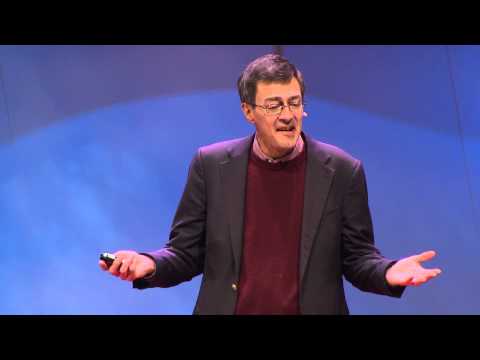
Presenting at TEDx
Anyhow, I plan to use my few minutes of fame to talk about the "Math for Sustainability" project. I want to say two things. The first thing is that mathematics - the "measuring, changing, risking, networking" toolkit that I have identified as central to MATH 033 - helps us see clearly, helps us to understand the choices and tradeoffs we are making today and the consequences that we are accepting for tomorrow. The second thing though is that this clarity will not somehow absolve us from accepting responsibility for our values, as though we could somehow outsource ethics to a giant cost-benefit analysis. Feel free to share how you think these two themes, and this tension, can somehow be conveyed in ten minutes of TED format.
I have just started working with "speaker consultants", etc, about the talk. It is clear that this is going to be very different from the kind of math lecture where the speaker walks into the room, fumbles around for a stick of chalk, and just goes with the flow. I am nervous - and excited! If you pray, pray that I will do this right. It's a great opportunity.
Saturday, December 6, 2014
AAR considers canceling scholarly conference, citing climate impact
![]() |
| Laurie Zoloth |
From the New York Times: "If the bioethicist Laurie Zoloth, the president of the American Academy of Religion, has her way, she’ll be remembered as the woman who canceled her organization’s conference, which every year attracts a city’s worth of religion scholars.
Sunday, November 30, 2014
Health update - 6 months
![]() | |
| The road goes ever on |