Monday, June 8, 2015

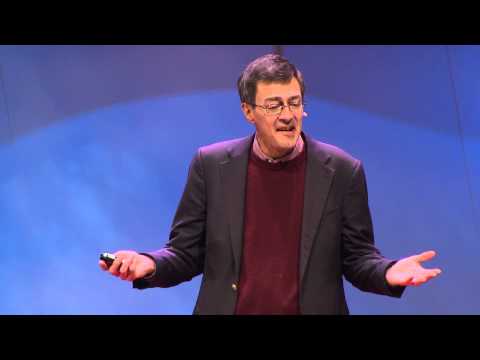
Thoughts from Dave Newport about "sustainable brands"

Dave Newport is a campus sustainability officer at UC Boulder and maintains a blog at "Inside Higher Education" on the interrsection of sustainability and academic life.

Today's piece describes his visit to a "sustainable branding" conference.  He begins:

"It would be easy to flip off the Sustainable Brands conference. Corporate raiders spouting the S-word? How much gooey new green wash can these suits concoct?

But that would be stupid.

Want proof it’s stupid? Well, the flip-off was my first impulse. ‘Nuff said.

So after a few years of people telling me it was worth the price (hefty) and the time (four days), at great personal sacrifice I went to the chichi San Diego oceanside resort hosting this green corporate orgy to rub cotton with the suits.

My excuse? Paul Hawken told me to. Well, sorta."

Read the full piece here

Friday, June 5, 2015

Reflections on the teaching of "Mathematics for Sustainability" - 2

Continuing my thoughts on MATH033... At the end of each class at Penn State, students get to fill out "SRTE" forms - that is "Student Rating of Teaching Effectiveness", a.k.a. "course evaluations".  I was especially interested to see what the students in Math 033 would say and I emphasized as strongly as I could that the course was brand new and that through their comments they had an opportunity to improve it for next time it was offered.  I was very glad to see the many extensive responses to this request.  In addition to comments via the SRTE process, three students took the time to write me longer emails describing their experiences in the class and their thoughts about how it might be made more effective.

Wednesday, June 3, 2015

How Worried Are You About Climate Change?


 I filled in a survey recently, which was intended to "help determine the most effective religious messaging on climate change". 

One of the questions in the survey was the one in the title: How worried are you about climate change? The survey offered a range of options from "extremely worried" to "not at all worried".  The last was further subdivided into two categories: "not at all worried because I don't believe climate change is happening" and "not at all worried because it is all part of God's plan for the end of the world".

I had a lot of trouble answering this question, and I came to feel that was because two questions had been fused into one - and that the way these two questions had been fused together itself has something to say about "religious messaging on climate change".

Tuesday, June 2, 2015

Matthew Dickerson at the ACMS conference

I've just returned from the biennial conference of the Association for Christians in the Mathematical Sciences.   This organization brings together several hundred students, faculty members, and others working in the fields of mathematics, statistics and computer science who want to explore how the Christian faith relates to their teaching, research and scholarship.  I remember discovering the ACMS when I was working in Oxford, and my delight at discovering that there were other people who were pondering the same kind of questions that bothered me.

There were two plenary speakers, Matthew Dickerson from Middlebury College (computer science) and Annalisa Crannell from Franklin and Marshall College (mathematics). Each gave two presentations, and both were excellent speakers.  Here I want to focus on Dickerson's second presentation, where he found himself discussing the ecological implications of "transhumanism" (Ray Kurzweil et al) and its relationship to the thought of C.S.Lewis.  I was quite surprised to discover that our Computer Science plenary speaker was also the co-author of a book - Narnia and the Fields of Arbol - on Lewis' environmental thought which I had recently read and which I had been planning to review some time on this blog.

Dickerson contrasted the implicit Platonism of Kurzweil - what matters is our "software" (that is, the "program" which constitutes our minds), our "hardware" (that is, our bodies) is defective and can and should be replaced by an artificial substitute - with the Christian hope of the resurrection of the body.  He quoted Lewis from chapter IV of Miracles:
The earliest Christian documents give a casual and unemphatic assent to the belief that the supernatural part of man survives the death of the natural organism.  But they are very little interested in the matter.
Surprising worlds from a defender of the supernatural! Lewis goes on
What they are intensely interested in is the restoration or "resurrection" of the whole composite creature by a miraculous divine act.
 Narnia and the Fields of Arbol appeals to Lewis' fiction to develop the idea that this hope - of the restoration not just of the human creature but of all creation - provides a foundation for an appropriate relationship between humanity and the rest of the created world.  Contrary to the famous thesis of Lynn White according to which Christianity, by demythologizing the sacred groves, had licensed humanity to exploit them, Lewis presented deforestation as a blasphemous project, as for instance in The Last Battle:
"Woe, woe, woe!" cried the voice. "Woe for my brothers and sisters! Woe for the holy trees! The woods are laid waste.  The axe is loosed against us. We are being felled.  Great trees are falling, falling, falling."
In this passage the natural world, represented by a Dryad, the "nymph of a beechtree", cries out to its human steward, King Tirian, for justice and protection from exploitation - exploitation which has been justified in the name of religion, yes, but of a false and cruel religion. Dickerson reads Lewis as an agrarian with a deep sympathy to nature and place, almost Wendell Berry as an Oxford don.

I very much agree with the basic theological point here. Humans are part of creation, not "above" it, and our hope is to be restored along with it, not to leave it behind after a technological Singularity or an eschatological Rapture.  Still, I would have been interested to hear more about how this works out in practice.   How do these principles inform our decision-making as Christians confronted daily with stewardship-related questions both large and small?

PS: More reading on this blog related to Lewis and the environment can be found here, here and here.


Tuesday, May 19, 2015

"Reason in a Dark Time" continued


Last year I wrote a review of Dale Jamieson's book Reason in a Dark Time for this blog.   Jamieson is a professor of philosophy and environmental studies, and his book struggles with two questions: what made it so hard for humans to avoid committing the planet to irreversible and damaging climate change? (it is clear that he regards this commitment as, effectively, already having been made) and what resources do we have to move forward from here?

In the New York Times yesterday, Jamieson is interviewed by Gary Gutting for the regular philosophy blog series The Stone.   Here is an extract from the interview, where he summarizes some of his thoughts on "resources to move forward".
G.G.: Do you have suggestions for coming to terms with such questions?
D.J.: I think we need to think ambitiously about what a morality would be like that was adequate to the problems we face in a high-population, densely interconnected world undergoing radical climate change. At the same time philosophers don’t invent moralities that people then go out and adopt. We need to figure out how people can act from within their existing moral psychologies in a way that is both more environmentally friendly and will help to give them meaning in a world that is so different from the one in which most of our values were created. I’ve tried to develop an account of the “green virtues” as a first effort in this direction.
G.G.: What are some of these “green virtues”?
D.J.: The ones I discuss in my book, “Reason in a Dark Time,” are cooperativeness, mindfulness, simplicity, temperance and respect for nature. They will not solve the problem of climate change on their own but they will help us to live with meaning and grace in the world that we are creating.
Read the whole interview here, and my review of Reason in a Dark Time here.

 Photo hotlinked from The Stone article referenced, believed to be fair use.

Wednesday, May 13, 2015

Reflections on the teaching of "Mathematics for Sustainability" - 1

So, we completed the first semester of teaching MATH033 - "Math for Sustainability".  About forty hardy students signed up, and as the semester progressed I felt that a learning community and class spirit began to come together.  For me as the lead instructor, I can say for sure that I have never had to work so hard on preparing a course!  It reminded me strongly of the time when I was a new faculty member - but even then, though I had not taught the courses before, I had at least experienced courses somewhat like them.  This time around, I felt like I was trying to create something almost entirely new.  It was stressful, but also extremely exciting.

I have this summer to reflect on the lessons learned from this first test run, and then we will offer the course again in the fall.  I'm planning to write a series of posts on this blog reflecting on various aspects of our experience with MATH033.  These will be part of my personal review process.   Among the topics I want to reflect on are:
  • The course content.  How well did the "four themes" organization (measuring, changing, risking, networking) work as a device for framing "sustainability math"?  How clear was it to students and faculty?   Especially in the fourth segment, "networking", I found myself talking more about decision-making (game theory) and less about connectivity (graph theory) than I had expected; I wonder if it would be better to re-name that last unit "Deciding".
  • The case study component: about a third of the class sessions were designated "case studies", applying course ideas to a particular environmental topic, and of those about half were delivered by visiting speakers.  How successful were these sessions in contributing to the overall objectives of the course? Could/should we try to focus on "case study themes" which cut across the "mathematical  segments" of the course?   Case studies which referred specifically to the PSU campus seemed to particularly engage many students: can we build on that?
  • The writing requirement component of the course needs to be thought about at greater length.  I wanted students to post regularly on a blog, using the skills that they had learned to make mathematically sound arguments about sustainability-related topics.  In general, I was disappointed with the results (though there were some excellent posts).  I didn't think enough about the fact that we would need to teach how to use mathematically ideas in writing pieces, and I didn't set the grading system up to give students enough push to revise and improve their pieces.  I strongly believe though that learning through writing quantitative arguments is an important component of the course, for reasons well expressed in this syllabus from Marilyn Frankenstein.  So this is something I need to work on restructuring over the summer.
The web site for the course is here.

Monday, May 11, 2015

Wanted: a theology of mining (part 6)

My last post in this series was nearly a year ago.  In December, blogger Cellarius left an interesting comment on that post - following along, I discovered his paper "God of piston and wheel" (can be found here) which begins
The psalmist hymns the benevolence of God who tells the number of the stars and yet also provides for his animal creation, including 'herb for the use of man' (Ps 147.4, 8b BCP). What happens when the same theological attention is given to the furnaces of the stars as Christian tradition has given to the biosphere? In what sense and to what purpose has the non-living fruit of creation been provided 'for the use of man'?
In thinking more about questions related to mining, I want to acknowledge the writings of Donald Hay.  Donald was Tutor in Economics at Jesus College in Oxford when I arrived as a very young mathematics fellow in 1986.  He was and is an example to me of how to live an academic life which is also a life of Christian vocation, and since his retirement he's invested himself in the program Developing a Christian Mind which helps students and others integrate vocational and intellectual training.  I think it's also fair to say that, as a professional economist, Donald would be skeptical about my embrace of a "limits to growth" philosophy. So it is interesting to turn back to his Economics Today: A Christian Critique, first published in 1989, to see what he has to say about nonrenewable resource extraction (which is what I mean in these posts by "mining").