Wednesday, May 13, 2015

Reflections on the teaching of "Mathematics for Sustainability" - 1

So, we completed the first semester of teaching MATH033 - "Math for Sustainability".  About forty hardy students signed up, and as the semester progressed I felt that a learning community and class spirit began to come together.  For me as the lead instructor, I can say for sure that I have never had to work so hard on preparing a course!  It reminded me strongly of the time when I was a new faculty member - but even then, though I had not taught the courses before, I had at least experienced courses somewhat like them.  This time around, I felt like I was trying to create something almost entirely new.  It was stressful, but also extremely exciting.

I have this summer to reflect on the lessons learned from this first test run, and then we will offer the course again in the fall.  I'm planning to write a series of posts on this blog reflecting on various aspects of our experience with MATH033.  These will be part of my personal review process.   Among the topics I want to reflect on are:
  • The course content.  How well did the "four themes" organization (measuring, changing, risking, networking) work as a device for framing "sustainability math"?  How clear was it to students and faculty?   Especially in the fourth segment, "networking", I found myself talking more about decision-making (game theory) and less about connectivity (graph theory) than I had expected; I wonder if it would be better to re-name that last unit "Deciding".
  • The case study component: about a third of the class sessions were designated "case studies", applying course ideas to a particular environmental topic, and of those about half were delivered by visiting speakers.  How successful were these sessions in contributing to the overall objectives of the course? Could/should we try to focus on "case study themes" which cut across the "mathematical  segments" of the course?   Case studies which referred specifically to the PSU campus seemed to particularly engage many students: can we build on that?
  • The writing requirement component of the course needs to be thought about at greater length.  I wanted students to post regularly on a blog, using the skills that they had learned to make mathematically sound arguments about sustainability-related topics.  In general, I was disappointed with the results (though there were some excellent posts).  I didn't think enough about the fact that we would need to teach how to use mathematically ideas in writing pieces, and I didn't set the grading system up to give students enough push to revise and improve their pieces.  I strongly believe though that learning through writing quantitative arguments is an important component of the course, for reasons well expressed in this syllabus from Marilyn Frankenstein.  So this is something I need to work on restructuring over the summer.
The web site for the course is here.

Monday, May 11, 2015

Wanted: a theology of mining (part 6)

My last post in this series was nearly a year ago.  In December, blogger Cellarius left an interesting comment on that post - following along, I discovered his paper "God of piston and wheel" (can be found here) which begins
The psalmist hymns the benevolence of God who tells the number of the stars and yet also provides for his animal creation, including 'herb for the use of man' (Ps 147.4, 8b BCP). What happens when the same theological attention is given to the furnaces of the stars as Christian tradition has given to the biosphere? In what sense and to what purpose has the non-living fruit of creation been provided 'for the use of man'?
In thinking more about questions related to mining, I want to acknowledge the writings of Donald Hay.  Donald was Tutor in Economics at Jesus College in Oxford when I arrived as a very young mathematics fellow in 1986.  He was and is an example to me of how to live an academic life which is also a life of Christian vocation, and since his retirement he's invested himself in the program Developing a Christian Mind which helps students and others integrate vocational and intellectual training.  I think it's also fair to say that, as a professional economist, Donald would be skeptical about my embrace of a "limits to growth" philosophy. So it is interesting to turn back to his Economics Today: A Christian Critique, first published in 1989, to see what he has to say about nonrenewable resource extraction (which is what I mean in these posts by "mining").

Monday, May 4, 2015

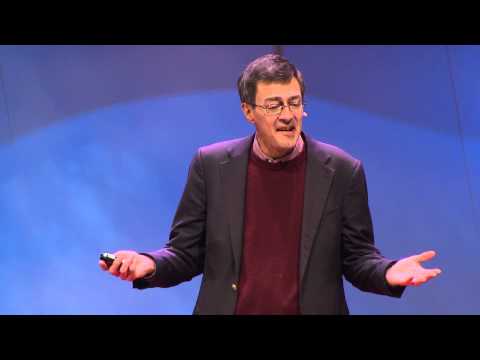
Cool Head, Warm Heart at TEDx


It's been a while, but the video of my presentation at TEDx has finally been officially released.  You should be able to click it in the window above, or follow this link to YouTube.

I am really grateful to all the TEDx crew who helped put this together and especially to Katie Kirsch who produced the wonderful visuals.

The Science paper that I refer to is

Steffen, Will, Katherine Richardson, Johan Rockström, Sarah E. Cornell, Ingo Fetzer, Elena M. Bennett, R. Biggs, et al. 2015. “Planetary Boundaries: Guiding Human Development on a Changing Planet.” Science, January, 1259855. doi:10.1126/science.1259855.

Thursday, April 2, 2015

Holy Week thoughts

Salvador Dali, Corpus Hypercubus
"...that you may have power, together with all the Lord's people, to grasp how wide and long and high and deep is the love of Christ - that you may be filled to the measure of all the fullness of God." (Ephesians 3:18,19)

Always a puzzle for mathematicians, this one.   Didn't Paul realize that there are only three spatial dimensions, not four? Is this just a case of his words getting ahead of him (which certainly seems to happen elsewhere in this letter)?

I was thinking about this passage today and I started focusing not on "love", with its dangers of becoming an abstraction, but on Christ's concrete body (in John's gospel, to "eat My flesh" is equivalent to receiving the love of Christ).  And I remembered that we live in a four-dimensional continuum if you include time also.  Thinking about this during Holy Week leads to a prayer...


your arms were stretched out wide for me;
your heart endured so long for me;
your body lifted high for me;
at last was buried deep for me.

this emptying, it had to be
so fulness could burst out for me.


Friday, March 20, 2015

Transparent Solar Panels as Metaphor

"A fully transparent solar panel that could make every window and screen a power source."  This article (published in 2014) has been showing up quite a bit in my Facebook feed over the last couple of weeks. Apparently some researchers at Michigan State have come up with a technology that "could turn any window or sheet of glass into a photovoltaic cell".   Sounds attractive, right?

The words "transparent solar panel" should be enough to set off anyone's BS detector.  After all, "transparent" means that it lets light through without attenuation.  And solar cells work by converting light energy into electricity. In that case it's gone, used up.  To imagine that light can be both used for energy generation and let through unimpeded to illuminate my room is like imagining that I can pay for my dinner this evening with the dollar that I already spent on breakfast this morning.

Now the scientists who developed these materials are, of course, perfectly aware of this fact.  If you look at the paper (Zhao, Yimu, Garrett A. Meek, Benjamin G. Levine, and Richard R. Lunt. 2014. “Near-Infrared Harvesting Transparent Luminescent Solar Concentrators.” Advanced Optical Materials 2 (7): 606–11) you'll find that what they have actually produced is a material which gathers energy in the infrared region of the spectrum while letting visible light pass through more or less unchanged.  I can well believe that this is a significant technical development.  On the other hand, if you take a look at the solar irradiance spectrum (above) you will see that a substantial portion of the power of sunlight does lie in the visible region.  A "solar panel" which does not make use of this portion of the spectrum would be at a significant efficiency disadvantage right from the get-go (to say nothing of the other losses which might arise from the more complicated nature of the "reluminescent" process employed vis a vis conventional solar panels).

These caveats though have mostly disappeared in the ExtremeTech article which has been circulating on Facebook, which only manages to describe as "not probable" the idea that you could put one of these gadgets over your smartphone screen and generate enough power to run it indefinitely.  If violating the first law of thermodynamics now counts just as "improbable", it is hard to imagine any context in which ExtremeTech might feel the word "impossible" to be appropriate.

Why is the "transparent solar panel" idea - the ExtremeTech version, not the reality - so appealing?  I suggest because it is an almost perfect metaphor for the world envisaged by one strain of green optimism, one that many of us would devoutly wish to be true.  In this "bright green" world, growth, production and consumption would continue unabated, but they would be overlaid by an almost invisible skin of miracle technology - a technology that finally would empower production without pollution, growth without guilt, and consumption without check.

A  little thermodynamics is usually enough to puncture such dreams.  That does not mean that technological improvements are worthless or futile, of course.  I think it does mean that the idea that technological progress will enable us to continue "business as usual" is a delusion.

Image credit: Wikipedia, http://en.wikipedia.org/wiki/File:Solar_Spectrum.png


Monday, February 23, 2015

Peterson Toscano presentation on climate change

A few months ago I heard activist Peterson Toscano present his piece Transfigurations: Transgressing Gender in the Bible. Toscano uses a combination of third-person teaching and first-person enacted drama to help us engage with Scripture in a new and unexpected way.  He makes us see fruitful connections between the ancient text and the present-day experience of people who do not conform to the traditional gender binary.

At the event, he mentioned that his latest performance piece would focus on climate change.  I just heard about a presentation of this piece (free and open to all) at Lehigh University in Bethlehem, PA, on Friday March 13th.   Details may be found here.  I don't know whether I will be able to attend, but I think that it should be an excellent and thought-provoking evening.

Photo credit: Peterson Toscano via Wikimedia Commons.  See http://en.wikipedia.org/wiki/Peterson_Toscano

Saturday, January 17, 2015

Qohelet and "Sustainability"

I've just finished rereading the book of Ecclesiastes.  Through a series of translations and semantic shifts, that is what Christians have come to call the decidedly un-ecclesiastical document whose principal figure is (the?) "qohelet" - the "one who assembles" or "calls together".  Is "Qohelet" a proper name or a job description? Does he "call together" a meeting or a collection of proverbs?  Is the book a reflection of wisdom and piety or of cognitive dissonance?  All of these questions are very much live ones, and none of them are very "churchy".

"Vanity of vanities, all is vanity" begins the book, according to the ESV translation.  (The NIV, similarly, has "Meaningless! Meaningless!").   These translations render the Hebrew hebel, whose literal meaning is "a puff of air", "a breath" or "a vapor" (I owe much of this discussion to Kathleen Farmer's book in the International Theological Commentary series).  Farmer points out
Metaphors are intentionally provocative figures of speech which can be understood in quite different ways.  For instance in Luke 13:20-21, 1 Cor 5:6-7 "leaven" is used as a metaphor for both good influence and bad.  It is possible then that hebel (meaning a puff of air) might be understood in either a positive or a negative sense.  Most translators [though] obscure the metaphorical nature of the original statement and replace the concrete, nonjudgmental phrase ("breath" or "a puff of air") with various abstract terms . . . When we look closely at the ways in which the word is used in other parts of the OT, it becomes clear that the essential quality to which hebel refers is lack of permanence rather than lack of worth or value.  A breath, after all, is of considerable value to the one who breathes it.  However, it is not something one can hang on to for long.  It is airlike, fleeting, transitory and elusive rather than meaningless...
While this perspective certainly doesn't resolve all the puzzles that Qohelet sets his readers, I found it very helpful. It seems to me that the translations criticized by Farmer may have imported into the text the rather foreign idea that nothing can be truly valuable unless it is eternal, contrary to some parts of the book itself which encourage us to celebrate and honor life despite its fleeting nature.

Which brings me to "sustainability".   Think about the famous definition from the Brundtland Report
...meeting the needs of the present generation without compromising the ability of future generations to meet their own needs.
In its frank acknowledgment of the succession of generations, the language here agrees with Qohelet that each individual human life is hebel.  But what about the life of the human race (or perhaps of "our civilization") as a whole?  One way of reading the word "sustainability" is that though our individual lives are "fleeting", it is of supreme moral importance to ensure that the life of humanity as a whole is endless.  Is that the only way to understand it? Is that a faith-full interpretation?

C.S.Lewis writes (in The World's Last Night),
 We all believe, I suppose, that a man should 'sit loose' to his own individual life, should remember how short, precarious, temporary, and provisional a thing it is... what modern Christians find it harder to remember is that the whole life of humanity in this world is also precarious, temporary, provisional.
Indeed, it is consistently the villains in Lewis' fiction who are obsessed with racial immortality (think of Queen Jadis, or of the space-traveling Professor Weston, or the sinister overlords of the N.I.C.E.) I think that as believers we may need a subtler definition of "sustainability" than "humanity going on for ever"... one which recognizes our duties to future generations even while acknowledging that all life "under the sun" is hebel - fleeting, mysterious, sometimes tragic, but also laden with joy and value.

(More questions than answers here!)

Image: Woodcut by G. Dore illustrating the Book of Proverbs.  Public domain:  http://commons.wikimedia.org/wiki/File:Dore_Solomon_Proverbs.png